Canadian Armed Forces Ranks
Explore the complete rank structure across all three service branches with detailed insignia, roles, and progression paths

Aviator
Avr

Aviator (Trained)
Avr(T)
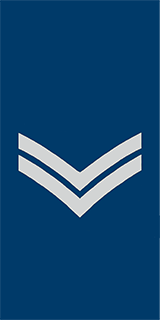
Corporal
Cpl
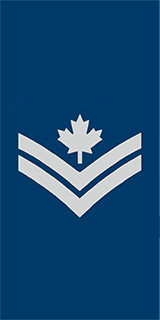
Master Corporal
MCpl
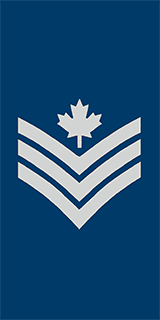
Sergeant
Sgt
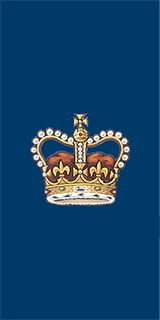
Warrant Officer
WO
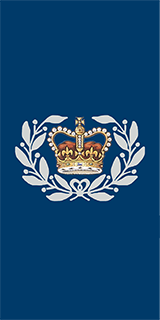
Master Warrant Officer
MWO
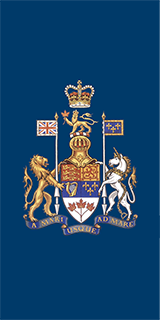
Chief Warrant Officer
CWO
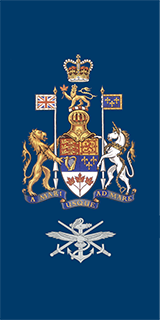
Senior Appointment Chief Warrant Officer
CWO
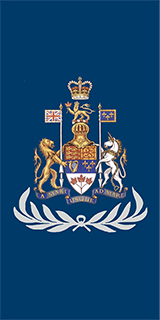
Command Chief Warrant Officer
CCWO
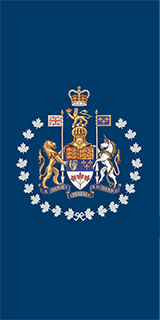
Canadian Forces Chief Warrant Officer
CFCWO

Officer Cadet
OCdt

Second Lieutenant
2Lt

Lieutenant
Lt

Captain
Capt

Major
Maj

Lieutenant-Colonel
LCol

Colonel
Col

Brigadier-General
BGen
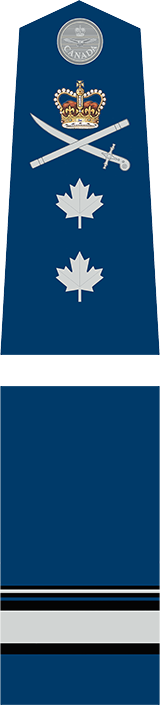
Major-General
MGen
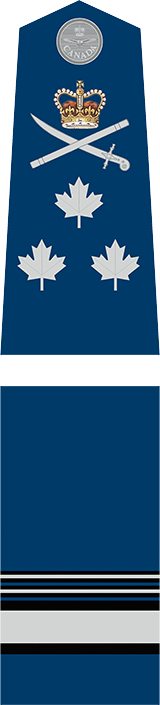
Lieutenant-General
LGen
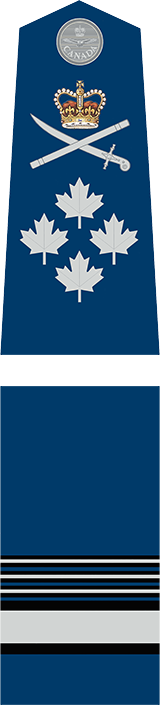
General
Gen
Understanding CAF Ranks
The Canadian Armed Forces rank structure is divided into two distinct categories, each with unique roles and responsibilities
Historical Context
Evolution of Canadian military rank structure
In 2011, the Government of Canada restored the historic service identity names: Royal Canadian Navy, Canadian Army, and Royal Canadian Air Force.
In 2022, the CAF modernized French rank names so they can be feminized. Members may choose the masculine or feminine form regardless of gender identity.
NCM Rank Categories
Non-Commissioned Members with specialized skills and leadership responsibilities
Entry-level to initial leadership
Entry-level through initial leadership positions.
Sailor 3rd Class / Private (Basic) / Aviator (Basic)
Entry rank for all NCMs (No chevrons)
Sailor 2nd Class / Private / Aviator
One chevron (Army/Navy) or propeller (RCAF) — After completing occupational training (1-3 years)
Sailor 1st Class / Corporal
Two chevrons — Typically requires ~4 years service (3 for some trades). Some trades (e.g., Military Police) promote immediately after training.
Master Sailor / Master Corporal
Two chevrons + maple leaf — (Appointment, but treated like a rank) First NCO level, requires leadership training and merit-based promotion
Leadership and warrant officers
Leadership and warrant officer positions.
Petty Officer 2nd Class / Sergeant
Three chevrons + maple leaf — NCO leadership, merit-based promotion. Often supervisors or section leads.
Petty Officer 1st Class / Warrant Officer
Large crown — Department/Platoon 2IC roles. Considered Warrant Officers, but commonly grouped with NCOs in practice.
Chief Petty Officer 2nd Class / Master Warrant Officer
Crown within a laurel wreath — Often hold Sergeant Major positions. Addressed as "Sergeant Major" or MWO by officers, Sir/Ma'am by NCMs.
Chief Petty Officer 1st Class / Chief Warrant Officer
Pre-1985 Canadian Coat of Arms — Highest standard NCM rank. Typically the highest-ranking NCM in a unit (ship, battalion, squadron).
These positions are appointments above the standard CWO/CPO1 rank, representing the highest NCM leadership in the CAF.
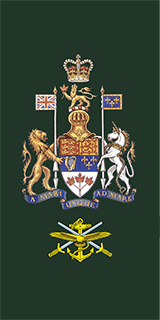
Senior Appointment CWO
CWO
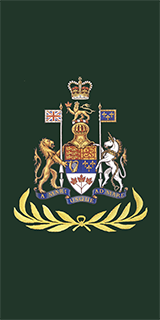
Command CWO
CCWO
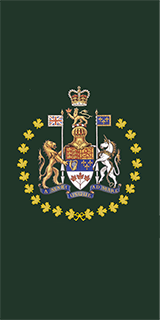
Canadian Forces CWO
CFCWO
Canadian Forces Chief Warrant Officer (CFCWO)
Highest NCM in the entire CAF, senior advisor to the Chief of the Defence Staff (CDS). Insignia: Coat of Arms with maple leaf wreath. This position rotates between Navy, Army, and Air Force.
Command Chief Warrant Officer (CCWO/CCPO)
Senior advisor to Commander RCN, CA, or RCAF (Lieutenant-General level). Insignia: Coat of Arms with a laurel wreath below the base.
Senior Appointment Chief Warrant Officer
Senior NCM appointments at major formations and bases. Insignia: Coat of Arms with crossed swords below the base, representing leadership at significant command levels.
Special appointments for military band leadership positions across all service branches.
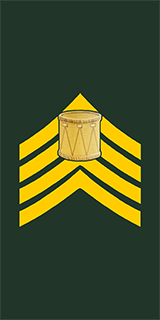
Drum Major
DM
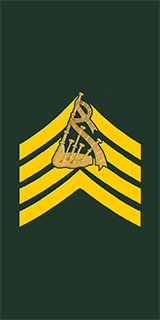
Pipe Major
PM
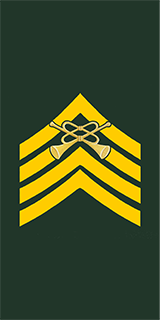
Trumpet Major
TM
Bandmaster
Leader and conductor of a military band. Responsible for musical direction, training, and performances.
Pipe Major
Leader of a pipe band, responsible for pipers and drummers. A traditional appointment in Highland regiments.
Drum Major
Senior NCM who leads the band in ceremonial parades and maintains discipline within the band.
Officer Rank Categories
Commissioned ranks with command authority and specialized roles
Officer candidates in training
Not yet commissioned, undergoing training for commissioning.
Naval Cadet / Officer Cadet
Insignia: Navy/Air Force: One narrow stripe | Army: White stripe centered on a pip
First commissioned ranks
First commissioned ranks, leading small groups and platoons.
Acting Sub-Lieutenant / Second Lieutenant (2Lt)
Navy/Air Force: One thick bar | Army: One star
Often leads small groups or begins phase training
Sub-Lieutenant / Lieutenant (Lt)
Navy/Air Force: One thick + one thin bar | Army: Two stars
Typical role: Platoon Commander, junior department head
Lieutenant(N) / Captain (Capt)
Navy/Air Force: Two thick bars | Army: Three stars
Senior platoon commander, Company 2IC, Staff officer
Unit and formation command
Eligible for sub-unit and unit command positions.
Lieutenant-Commander / Major (Maj)
Navy: Two thick bars with one thin between | Army/Air Force: Crown
Sub-unit command: Company, Squadron, Ship department
Commander / Lieutenant-Colonel (LCol)
Navy: Three thick bars | Army/Air Force: Crown + star
Unit command: Battalion, Naval ship, CAF schools
Captain(N) / Colonel (Col)
Navy: Four thick bars | Army/Air Force: Crown + two stars
Formation command (e.g., Brigade)
Army Only - Gorgets
For Colonels and above, the Army wears gorgets (neck ornaments) on the uniform.
Highest CAF leadership
Highest leadership levels in the CAF.
Common Features:
Single very thick cuff bar on dress uniforms
Epaulet insignia representing their level
"Crossed swords" symbol (Air Force uses swords/wings equivalent)
Commodore / Brigadier-General (BGen)
Crown above crossed swords + one maple leaf
Division-level commanders, Senior staff officers
Rear-Admiral / Major-General (MGen)
Crown above crossed swords + two maple leaves
CANSOFCOM, Chief of Military Personnel (CMP)
Vice-Admiral / Lieutenant-General (LGen)
Crown above crossed swords + three maple leaves
VCDS, Commander RCN/CA/RCAF, Commander CJOC
Admiral / General (Gen)
Crown above crossed swords + four maple leaves
Held only by the Chief of the Defence Staff (CDS)